

June is Pride Month, when LGBTQIA+ communities come together to celebrate the freedom to be themselves. The most iconic LGBTQIA+ symbol is the rainbow flag — but how did that come to be?
The rainbow flag was designed by Gilbert Baker after Harvey Milk challenged him to create a symbol of pride for the gay community in June of 1978.
Originally, the flag had 8 colors – hot pink, red, orange, yellow, green turquoise, indigo, and violet. Hot pink was quickly removed because fabric was hard to get in that color. In 1979 turquoise and indigo were combined into royal blue, so the flag had an even number of stripes and could be split in two for decorating parade routes.
This left us with the 6 stripes we see today. Each color has its own meaning:
- Red for Life
- Orange for Healing
- Yellow for Sunlight
- Green for Nature
- Blue for Serenity
- Violet for Spirit
You can also watch this read through of Pride to learn more about Harvey Milk and the rainbow flag.
In 2018, Daniel Quasar designed the Progress Pride Flag, the most commonly used design today. The additional stripes of brown, black, pink, white, and blue represent queer people of color and the transgender community, with an additional nod to the community members who cannot be here today. You might also see a version of this flag with a yellow triangle and a purple circle: this is the symbol for the intersex community. Learn more about 21st-century LGBTQIA+ flags.
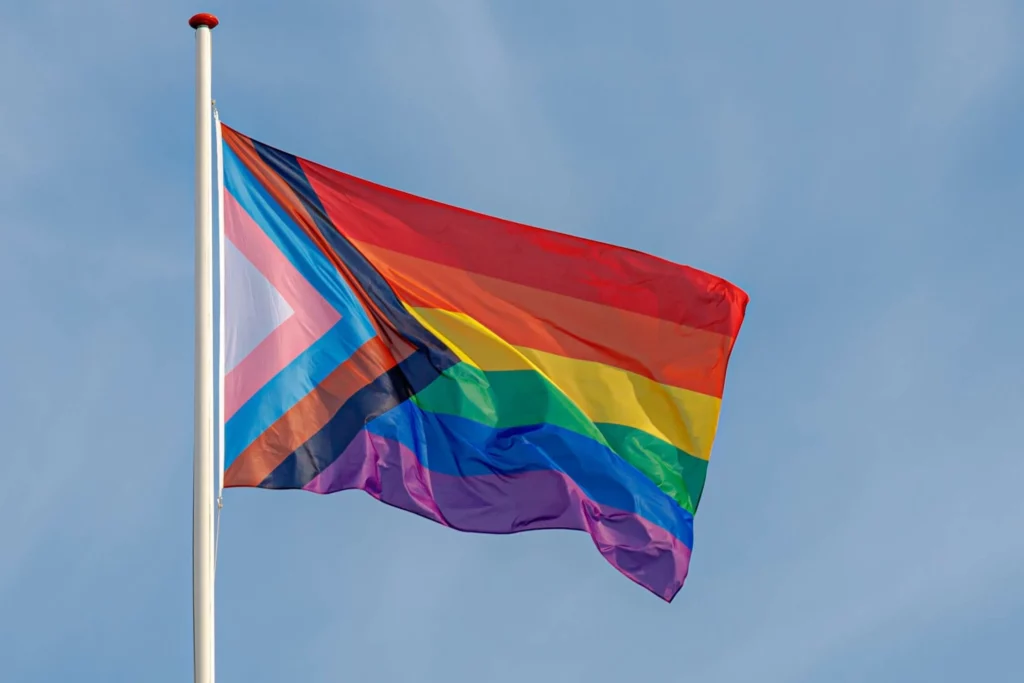
The rainbow flag is a symbol of pride for those in the LGBTQ+ community. What about yourself are you proud of? What makes you you?
Inspired by the history and meaning of the rainbow flag, design and create a flag that uses colors and symbols to represent your identity.
- What important things about you will you include on your flag? What makes you who you are?
- How will you represent these parts of yourself? How will you use colors, shapes, or patterns to illustrate your ideas?
Need more inspiration? Explore the symbolism of national flags.
Now it’s time to make your flag! You can make a physical flag, using paper or fabric, or digital flag, using a program or app – whatever you think represents you better!
Consider making a fabric flag. You could use plain fabric and decorate it with markers, attach solid colored pieces of fabric to build patterns, or even use old clothes or blankets that represent you in your design. Check out the sewing tips videos to help you get started.